The Velvet Rope: How 'Voluntary' Became the Government's Most Effective AI Weapon
The United States government has decided who gets to use OpenAI’s latest model. GPT-5.6 Sol, previewed on June 26, is available only to a “small group of trusted partners” approved by the Trump administration — roughly 20 entities initially, all routed through Amazon Bedrock, with the government “approving access customer by customer” during the preview window. Sam Altman told staff this was the federal government’s idea, not OpenAI’s. “We don’t believe this kind of government access process should become the long-term default,” the company said in a statement, framing the arrangement as a temporary concession. But temporary arrangements forged under national security pressure have a habit of hardening into precedent, and this one arrived with a ready-made institutional infrastructure already in place.
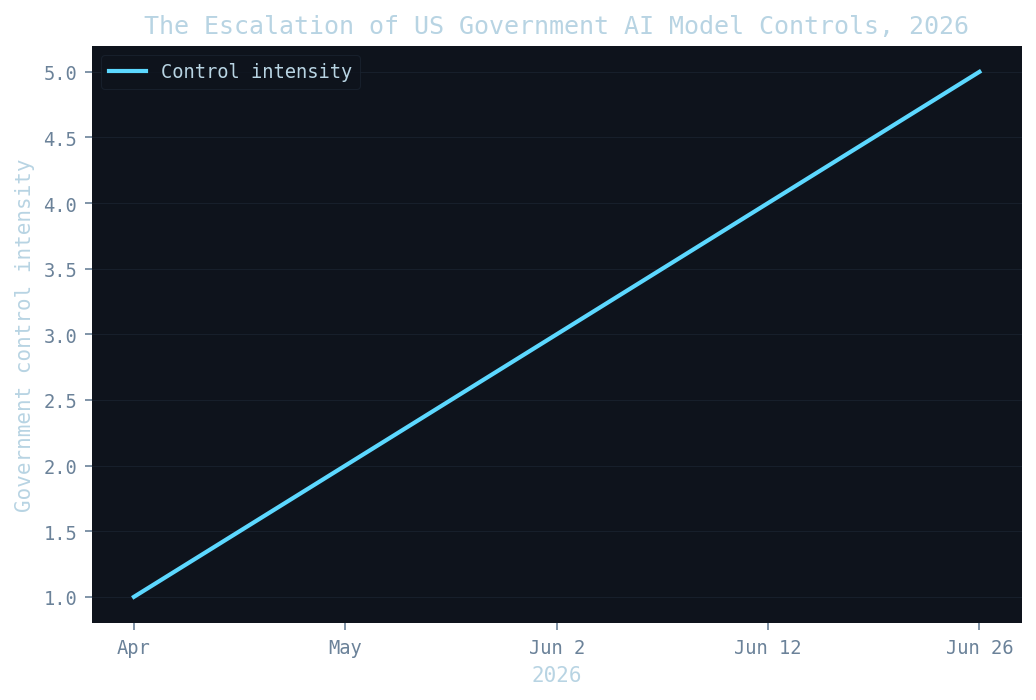
The scaffolding was built in three rapid stages. In April, Anthropic voluntarily withheld its Mythos model, deeming it too dangerous for public release — the first time a frontier lab self-censored on cyber-capability grounds. In May, the renamed Center for AI Standards and Innovation (CAISI) — the word “safety” stripped from its title by Trump in a pointed jab at Biden — signed voluntary evaluation agreements with Google DeepMind, Microsoft, and xAI. On June 2, Trump signed an executive order creating a “voluntary framework” for pre-deployment vetting of frontier models, directing agencies to design the process within 60 days. By June 12, the framework’s voluntary character had collapsed entirely: export controls forced Anthropic to pull Fable 5 offline entirely after the NSA confirmed that guardrails could be bypassed. The GPT-5.6 staggered release, arriving two weeks later, was presented as voluntary cooperation. It was, in practice, the fourth step in an escalation that had already crossed the mandatory threshold.
What makes this a genuine structural shift rather than a one-off security intervention is the parallel story at Anthropic. The Trump administration didn’t just impose controls on Anthropic’s models — it reshaped who at the company is permitted to negotiate. Wired reported this week that CEO Dario Amodei has been sidelined from White House talks, replaced by co-founder Tom Brown and public policy chief Sarah Heck. An anonymous source involved in the calls told Wired: “Tom Brown is not being a weirdo like Dario and can actually engage.” The White House, in other words, is not merely vetting models. It is vetting the people who build them, and deciding which executives it finds sufficiently pliable. When a government can effectively determine which corporate leaders it will do business with, the line between regulation and personnel control blurs to invisibility.
The critical pushback has been sharp but fragmented. Ars Technica flagged that CAISI has not published testing standards — “nobody knows what ‘safe’ means,” as one former White House cyber policy director put it — and that the voluntary framework may lack both funding and expertise to genuinely evaluate frontier models. On Hacker News, the community reaction was equally pointed. One commenter observed that “if GPT-5.6 preview is not available outside US government approved ‘trusted partners’, I don’t see how the General Available can be trusted later. Who knows what they will fix, block or change in the model between the preview and GA time.” Another asked simply: “So where are the champions of capitalism?” The concern isn’t only about overreach — it’s that a vetting process with no published criteria, no transparency, and no appeal mechanism is being normalised through successive announcements, each slightly more restrictive than the last.
The deeper issue is that “voluntary” has lost all meaning in this context. OpenAI didn’t volunteer — it watched Anthropic get forcibly shut down and calculated that a cooperative posture was the cheaper option. The executive order’s 30-day pre-release access window for “covered frontier models” isn’t voluntary when the alternative is an export control order that takes your product offline entirely. The framework creates a binary: submit to government vetting, or lose market access. That’s not a choice. It’s a permitting regime dressed in the language of collaboration, and every frontier lab now operates under it whether they signed anything or not.
Sources
- OpenAI staggers AI model release after Trump administration request — The Guardian
- OpenAI limits newest ChatGPT product to Trump-approved customers — AP News
- Previewing GPT-5.6 Sol — OpenAI
- The Trump White House Is Over Anthropic CEO Dario Amodei — WIRED
- Anthropic’s White House Negotiations Are Reportedly On Track After ‘Weirdo’ Dario Amodei Was Replaced — Gizmodo
- Spooked by Mythos, Trump suddenly realized AI safety testing might be good — Ars Technica
- U.S. government will decide who gets to use GPT-5.6 (HN discussion) — Hacker News
- Trump signs executive order for voluntary federal vetting of AI models — PBS NewsHour
- Trump Executive Order on AI: Voluntary Framework, Cybersecurity Focus — Freshfields