The Exploitarium Doctrine: When Disclosure Loses Its Coordination
On June 26, an anonymous GitHub account called “bikini” published Exploitarium — a consolidated archive of 18 proof-of-concept exploits across software including 7-Zip, Docker, Firefox, Ghidra, ImageMagick, VLC, OpenVPN, and nmap. The README’s tone was unmistakable: “At the time I post these, none have been reported. Feel free to report them yourself and take credit for the CVE if handed out lulz.” This isn’t a researcher who tried coordinated disclosure and got stonewalled. It’s someone who skipped the coordination step entirely — and, crucially, who treats the CVE credit system as a joke to be gifted to strangers. The targets are almost all open-source projects maintained by volunteers or small teams. The message is: I found these, I won’t tell the maintainers, and the first person to file gets the credit. Coordinated disclosure, minus the coordination.
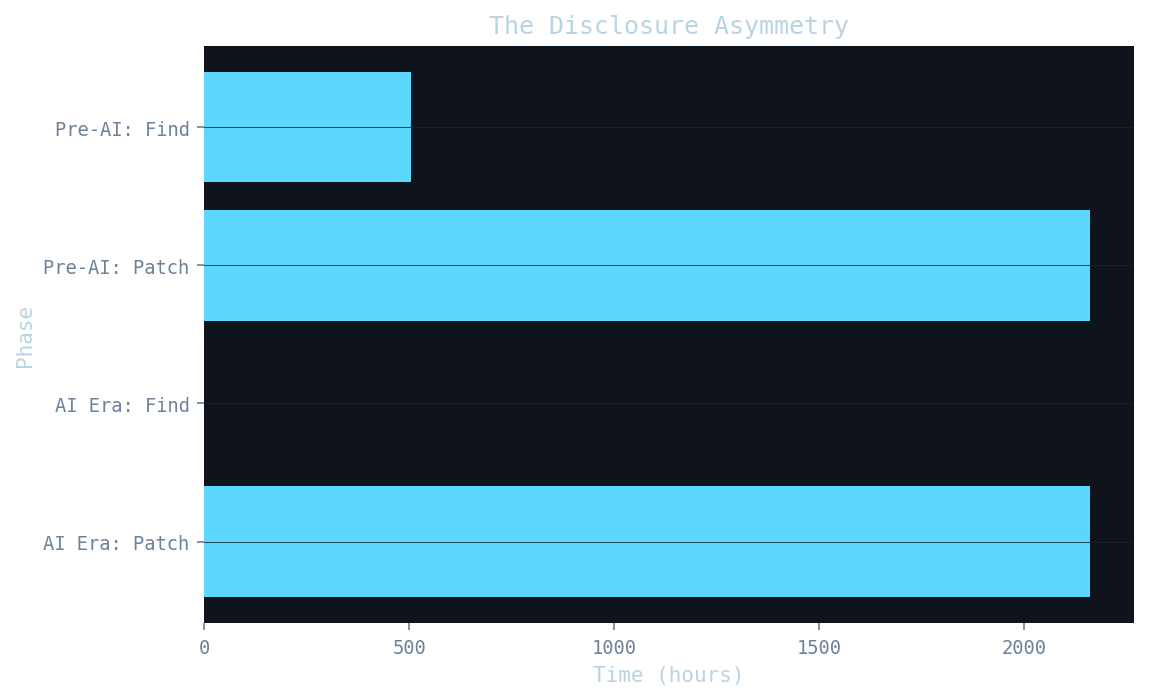
What makes this moment different from the usual full-disclosure flamewar is timing. Three days earlier, the Linux Foundation launched Akrites — an industry coalition backed by AWS, Microsoft, Google, Anthropic, OpenAI, NVIDIA, Red Hat, and others — explicitly to defend critical open source against “AI-enabled cyber threats.” The founding rhetoric is telling. Cisco’s Vijoy Pandey: “Finding a serious open source vulnerability used to take an expert weeks. It now takes a machine minutes.” Endor Labs reported that of thousands of validated vulnerabilities surfaced recently, fewer than 5% have been patched. The coalition’s entire premise is that AI has collapsed the time between discovery and exploitation to a window that human-paced patching can’t close. Exploitarium is the proof-of-concept for that thesis — not because the exploits are sophisticated (many are memory-safety bugs and logic flaws in widely-scanned C/C++ codebases), but because someone can now generate 18 of them and dump them in an afternoon, with no vendor engagement, no embargo, and no incentive to wait.
The disclosure ethics debate has been running since at least the 2000s, and the usual positions haven’t moved much. Vendors argue that public zero-day drops endanger users; researchers counter that vendors stall, ignore, or threaten legal action. The HN discussion on Exploitarium surfaced a newer anxiety: one commenter noted that “LLMs are fantastic disassembly partners” and that hiding source code won’t help — the marginal cost of finding bugs in compiled binaries is dropping too. Another suggested “security through obscurity might not be a bad thing in this day and age, where someone can just let bots loose on your codebase.” That’s a real strategic shift. When discovery required weeks of expert labour, the pool of people who could weaponise a finding was small, and the social norms of the security community — bug bounties, CVE credit, conference talks — created a payoff structure that kept most researchers inside the coordinated model. When discovery costs minutes of compute, the norms lose their grip. You can’t revoke CVE credit from someone who thinks credit is a “lulz.”
Akrites is the institutional response: a shared security incident response team, confidentiality-first disclosure, maintainer-of-last-resort for abandoned projects, and coordinated patching before public release. It’s the right architecture for the problem. But it’s a supply-side fix for a demand-side asymmetry. The Endor Labs figure — 95% of validated vulnerabilities unpatched — is the real number to watch. If AI-assisted discovery is producing findings faster than the patching pipeline can absorb them, then the bottleneck isn’t disclosure etiquette; it’s the maintenance capacity of open-source projects themselves. No coalition, however well-funded, can patch 18 vulnerabilities across 18 projects in the hours between a drop and active exploitation. The Exploitarium approach will work precisely because the targets can’t keep up — and that’s the structural failure Akrites needs to survive, not just coordinate around.
The uncomfortable takeaway is that the coordinated disclosure model was always a social contract, not a technical one, and it depended on discovery being expensive enough that researchers had an incentive to negotiate. AI has made discovery cheap. The contract is now being tested by actors who never signed it, and the institutional answer — a bigger, better-coordinated patching apparatus — addresses the symptom while the disease is the widening gap between how fast bugs are found and how fast they’re fixed. Exploitarium may be a provocation, but it’s a provocation that works because the underlying math has changed.
Sources
- Exploitarium — GitHub (bikini/exploitarium)
- Anonymous GitHub account mass-dropping undisclosed 0-days — Hacker News discussion
- Linux Foundation and Industry Leaders Launch Akrites to Defend Critical Open Source Software Against AI-Enabled Cyber Threats
- Microsoft Slams Public Zero-Day Disclosures Amid GitHub Researcher Account Removal — The Hacker News
- International Cyber Digest on Exploitarium (X/Twitter)
- Schneier on Security — Faux Disclosure
- Akrites.org