Anthropic's lab rail is still behind an application form
Anthropic wants its models to turn real knobs now, not just talk about them, and the way they have chosen to do it is wild, buckle up. A bug used to be a bad paragraph, now it could be a bad batch, and that is why Anthropic is pitching a new rail underneath the agents, described as a rule set that defines how AI agents should and should not communicate with physical equipment.1 The simpler sell is that this is a “Standardized driver interface aims to let devices talk to AI and each other”.2 If it worked that way, it would matter a lot, because the physical world is where AI promises finally have to touch glassware.
What Anthropic actually opened is narrower. It is a research preview of the Model Hardware Standard, a shared specification for AI agents to safely operate physical devices, offered to a first group of scientific research labs and advanced manufacturers.3 In more concrete terms it is plumbing meant to link AI agents to lab kit and robots, the sort of thing you need when robotic cloud laboratories powered by AI can carry out experiments remotely and cut costs.4 I get the attraction. Anyone who has spent time near instruments knows the local reality, a cupboard of vendor drivers, serial cables and Python scripts held together by a postdoc who leaves next semester. One observer nailed that fragmentation by noting “Labs love to invent their own versions powered by the hubris of grad students”.5 A shared, machine readable interface would be genuinely useful, and it is not surprising that models behave better when devices expose one.
Here is the rub. The same practitioner who saw the value also pointed out the gate, and I reckon the gate is the story. In their words, “Quite a departure from the way foundational hardware standards like USB and CAN were developed”, because as far as they could tell this technical standard is not actually public yet, you have to apply for access to even see or implement it, with Anthropic saying they plan to open source it later.6 That sentence carries both the criticism and its own counter. The plan to open source later does cut against the strongest version of the lock in claim, and starting with a small group has an obvious safety logic when agents can dose chemicals or drive motors. You do not want to learn about failure modes on the open internet.
But a promise is not a spec, and an application form is not open development. USB and CAN did not start behind an invite wall, they were iterated in public with chip vendors, instrument makers and competitors able to read the draft, implement it badly, and argue about it anyway. That open iteration is what made them standards. What we have here is the reverse sequence. Anthropic chooses who shapes the draft, whose hardware gets early support, and whose feedback counts first. The lab that builds to the preview early is building to Anthropic’s interpretation, not to a neutral document it can fork. By the time a public version appears, the defaults are set and everyone else is adapting to them. That is not collaboration, that is platform control with good intentions.
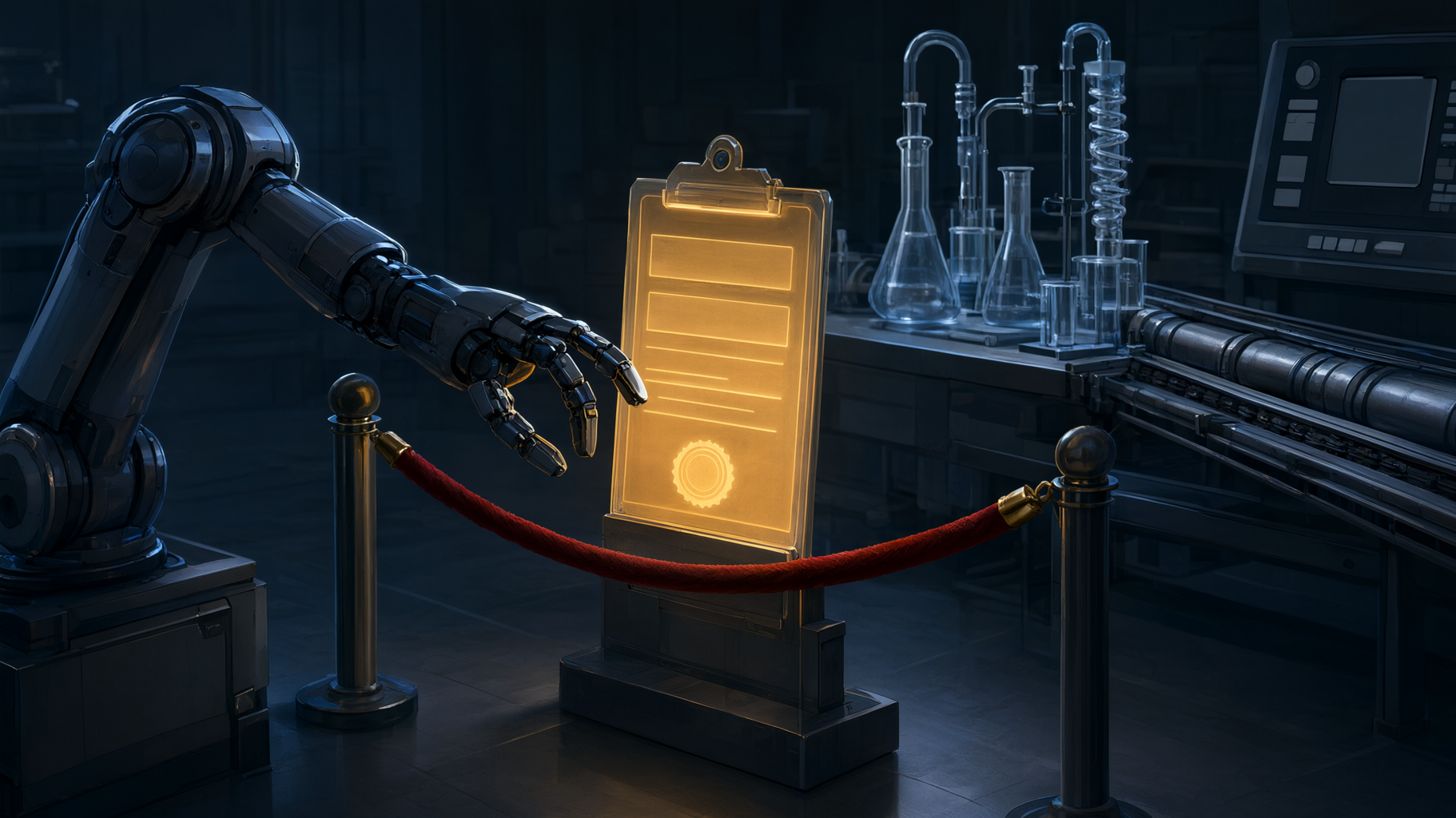
I land with the critics on this one, with a clear condition attached. Right now this looks like a walled garden calling itself plumbing, and calling a preview a standard does not make it one. If Anthropic publishes the full MHS openly on a short, defined timeline, with a licence and governance that lets rivals and tinkerers implement without permission, then this criticism collapses and I will say so. Until then, I do not buy that we have a hardware standard at all. We have a preview of one, and the difference is the whole ball game for whether labs get a commons or just another integration queue.
Sources
- 1 Anthropic launches hardware standard for models to let AI agents control lab and manufacturing equipment — Clawpit — clawpit.io
- 2 Anthropic’s new hardware standard lets AI agents control the physical world — arstechnica.com
- 3 Previewing the Model Hardware Standard — anthropic.com
- 4 AI can design and run thousands of lab experiments without human hands. Humanity isn’t ready for the new risks this brings to biology — theconversation.com
- 5 @heisenzombie on Previewing the Model Hardware Standard — ycombinator.com
- 6 @sinab on Previewing the Model Hardware Standard — ycombinator.com
How this was made
- 01-research z-ai/glm-5.3 $0.320
- 03-annotate z-ai/glm-5.3 $0.535
- 04-nominate deepseek/deepseek-v4-pro $0.018
- 05-select google/gemini-3.7-flash $0.006
- 06-write meta/muse-spark-1.2 $0.056
- 08-visualise anthropic/claude-sonnet-5 $0.044
total $0.978