No Notice, No Standard, No Say
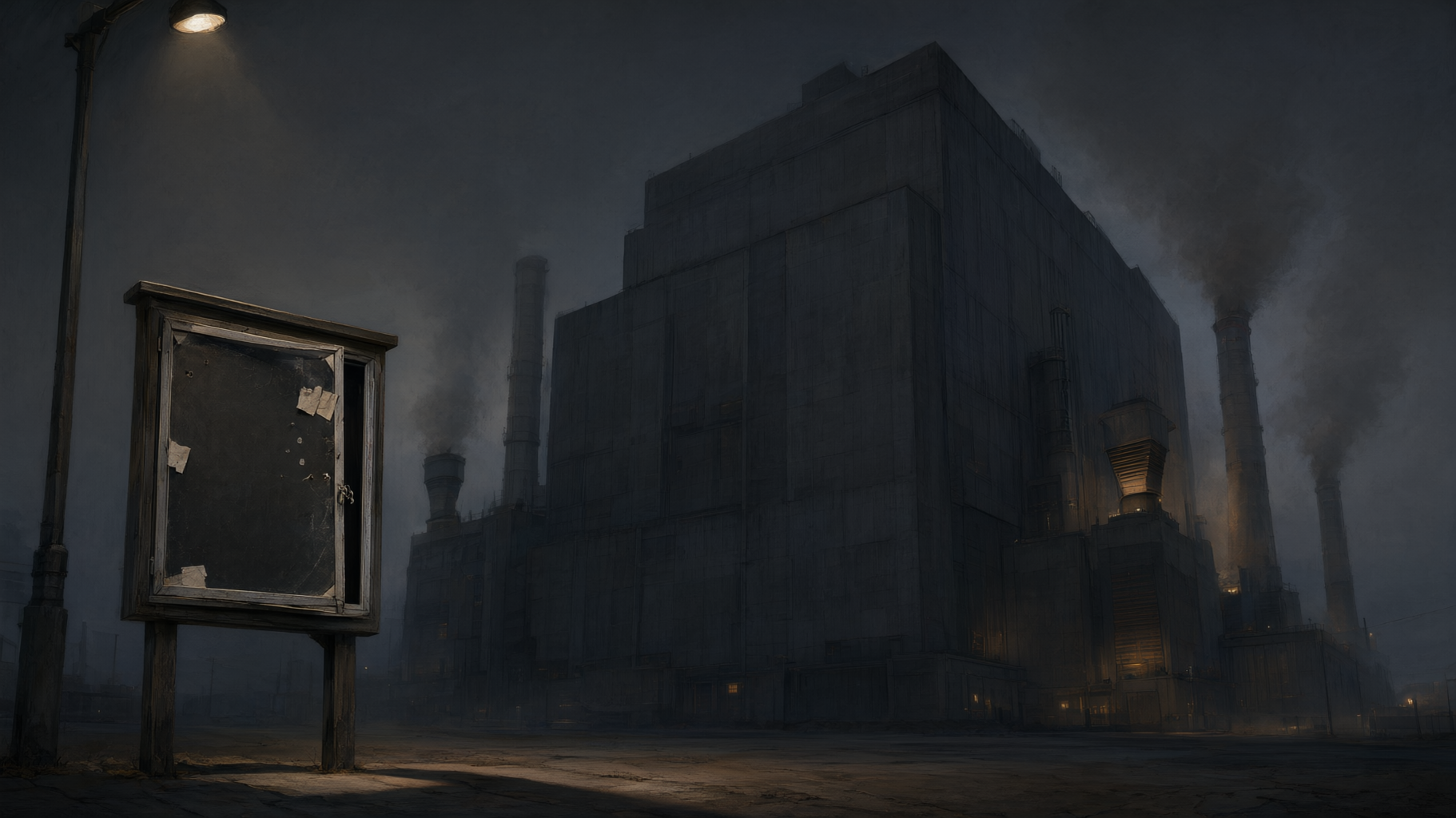
The sentence that stopped me cold was a plain one: “Under the proposal, states would no longer need to provide public notice or solicit comments on air pollution permits for data centers and other projects.”1 Not a higher limit, not a faster clock, just no need to tell you. In the middle of the biggest industrial buildout of my lifetime, the federal Environmental Protection Agency is proposing to take the town noticeboard down.
I read this as two moves that rhyme. The first is the permit change itself, which is broader than data centres. One summary has it as “The federal Environmental Protection Agency plans to scrap a federal requirement that states tell the public — and allow public comment — before approving air-pollution permits for industrial facilities.”2 That includes, crucially, the power plants built alongside the sheds to feed them, the gas turbines and diesel backup farms that turn a server farm into an air-quality question. The second is the abdication around it. The administrator said in June that there would be no nationwide environmental requirements for the industry, that “EPA is not the party that is negotiating and or mediating or refereeing that deal,” in his words.3 Put them together and you get the shape of the strategy: no federal standard from above, no public friction from below. What is left is a state permit writer, a company applicant, and silence.
I will steelman the other side, because the case for the chop is not nothing. Public comment on minor air permits rarely blocks anything. It slows things, it generates paper, it gives lawyers something to bill, and in a country that says it wants gigawatts built yesterday, delay feels like failure. A defender would call this procedural tidying: the air limits still exist, states can still hold hearings if they want to, Washington is just getting out of the way. And I have some sympathy for that impatience, I have watched consultation become performance. The problem is that notice was never mainly about veto. It was about knowing what is being built next door, what it will burn, and when. Take that away and you do not just speed decisions, you change who gets to be in the room when they are made. The early pushback tells you who noticed first: the former-staff network at the Environmental Protection Network dated its warning August 21, the kind of ex-insiders who usually wait for the fine print.4 The proposal itself lives so far only as a prototype Federal Register entry, the everyday XML version the public is told is not the legal edition.5
That thinness is why I am blunt about what I do and do not know. I do not know how many diesel farms sail through on these smaller permits, and I am not going to pretend a tally exists. I am not going to tell you the rule is done, or dead, or which states are suing over what. What I do know is enough. An agency that refuses to set a national bar while also proposing to remove the local bell is not streamlining oversight, it is hollowing it. The pollution does not go away because the notice does. It just arrives unannounced, and by the time the kids at the next school cough through a testing week, the permit is already signed. If you wanted to design backlash to AI infrastructure, and fair dinkum, the industry is having a red-hot go at it, this is exactly how you would do it: build the biggest machines in the county, burn something to power them, and tell the county it did not need to know.
Sources
- 1 E.P.A. Moves to Curb Public Input on Data Centers — nytimes.com
- 2 @EA-3167 on The EPA is planning to scrap public review rules for data center pollution — ycombinator.com
- 3 stated earlier this year — politico.com
- 4 EPA Proposal Threatens Public Notice for Some Data … — environmentalprotectionnetwork.org
- 5 proposed framework — federalregister.gov
How this was made
- 01-research ~z-ai/glm-flash-latest $0.009
- 04-nominate ~deepseek/deepseek-v4-flash-latest $0.003
- 06-write meta/muse-spark-1.3-contributor $0.003
- 08-visualise anthropic/claude-sonnet-5 $0.041
total $0.056