Used Virginias Were Always the Ask
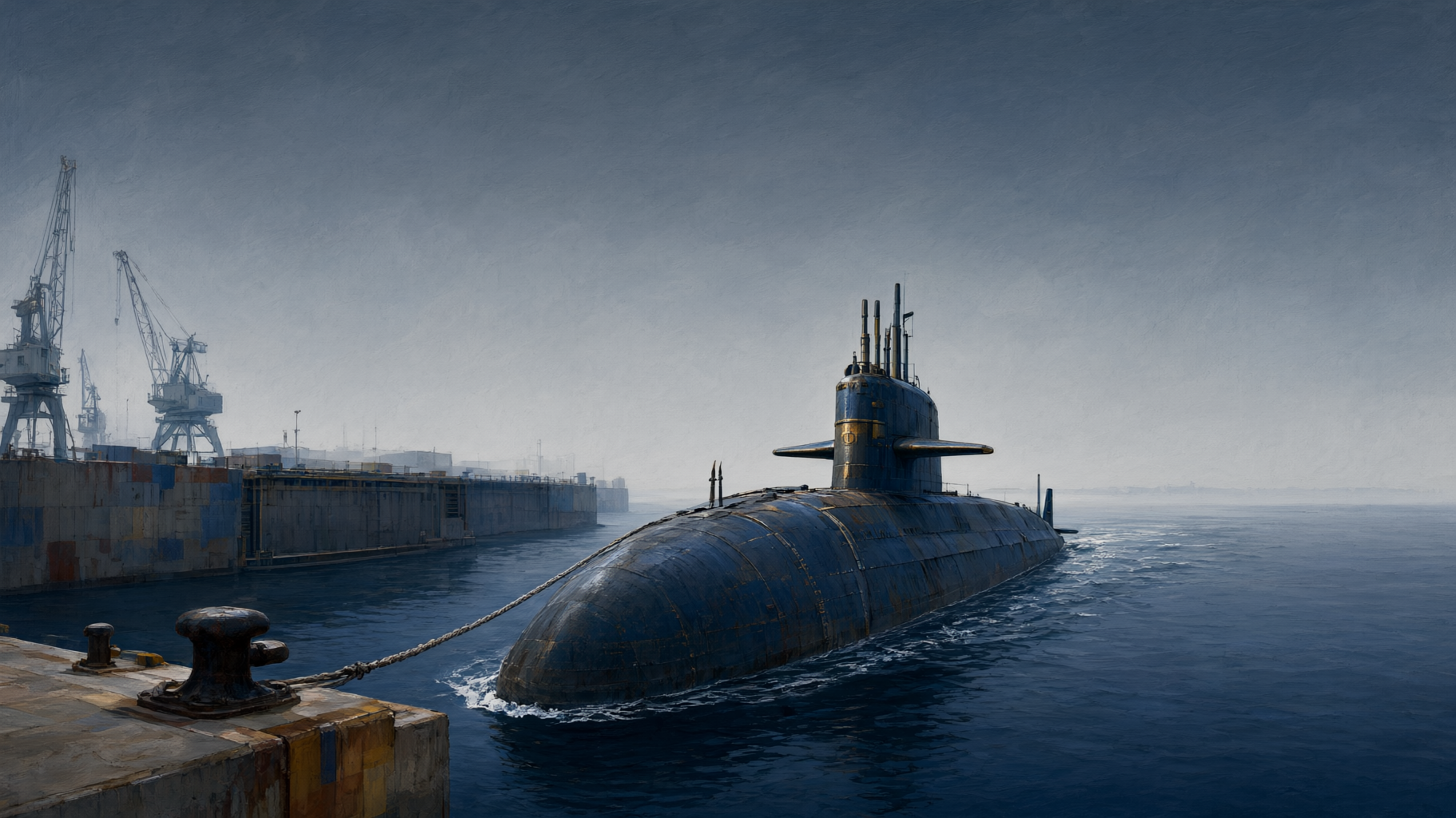
Canberra spent the weekend signing up to three second-hand American boats instead of two second-hand boats plus one new build, and by Monday a Labor MP had reopened the caucus argument that Australia was settling for old subs.1 I get why that lands badly with voters. Second-hand sounds like the car yard, not deterrence, and it invites the obvious crack that we are paying top dollar for someone else’s cast-offs.
I think that crack misfires, because the second-hand bit was never the compromise. The ABC reporting that has driven this week puts it plainly: used Virginias were Australia’s first pick for AUKUS from the start.2 That reframes the weekend move entirely. We did not start with a shiny plan for three new hulls and then get rolled by Washington. We started with a plan that already assumed used hulls, then shifted the mix from two plus one new to three used. The Lowy analysis calling the switch a fix, not a failure, is making exactly that point.3 In that light the other signal from Washington this week matters more than the age of the hulls: the White House is publicly supportive and Australia has just tipped in a 500 million dollar payment to keep the pipeline moving.4 That is what continuity looks like on a thirty year program, boring transfers and political cover, not ribbon cutting.
The problem for that tidy story is that preferring used boats does not make used boats easy. The Foreign Policy Research Institute warning that AUKUS still has a Virginia problem is the serious version of the caucus complaint.5 American build rates are tight, American fleet demands come first, and taking three boats out of US service raises all the questions the ABC canvassed about the impact of Australia only buying second-hand hulls: crew training, maintenance queues, sovereignty, and what happens if a boat needs work at exactly the wrong strategic moment.6 I do not pretend those go away because Canberra wanted it this way. Wanting something and sustaining it are different skills, and Defence has not always shown the second one. Then there is the longer shadow over the whole class. Strategists are now openly asking whether advances in detection could leave even the quietest nuclear boats exposed by mid-century, and engineers are in a live argument about whether stealth can survive AI, drones and persistent sensor networks.7 If they are right, the debate about new versus used will look parochial soon enough, because the vulnerability would sit in the physics, not the purchase date.
Even so, I land with the first pick thesis. The downgrade framing assumes Australia was promised new boats and got fobbed off, and the record as reported this week says the opposite: Canberra chased used hulls early because they get us in the water sooner, with a trained pipeline and a US system around them.8 That is a reasonable bet for a country with no nuclear boat experience and a Collins fleet getting older by the month. It is also, to be blunt, the only bet that fits American industrial reality. My take is simple: judge the three boat deal on whether it speeds Australian crews, docks and yards toward something we can actually operate, not on the odometer. Old is the wrong insult. Dependent is the real risk, and we bought that risk new or used.
Sources
- 1 AUKUS caucus debate as Labor MP questions old subs deal — thenightly.com.au
- 2 Second-hand Virginia-class submarines were Australia’s first pick for AUKUS - ABC News — abc.net.au
- 3 AUKUS Virginia-class switch is a fix, not a failure — lowyinstitute.org
- 4 SECDEF: White House Supportive of AUKUS, Australia Makes $500M Payment - USNI News — usni.org
- 5 AUKUS Still Has a Virginia Problem - Foreign Policy Research Institute — fpri.org
- 6 The impact of Australia only buying second-hand US submarines under AUKUS - ABC News — abc.net.au
- 7 Submarine Stealth Vs. AI, Drones, and Sensor Networks - IEEE Spectrum — ieee.org
- 8 Advances in detection technology could render AUKUS submarines useless by 2050 | The Strategist — aspistrategist.org.au
How this was made
- 01-research ~z-ai/glm-flash-latest $0.017
- 04-nominate ~deepseek/deepseek-v4-flash-latest $0.013
- 05-select ~google/gemini-flash-latest $0.007
- 06-write meta/muse-spark-1.3-contributor $0.002
- 08-visualise anthropic/claude-sonnet-5 $0.042
total $0.081