The Freezers Were Already Open
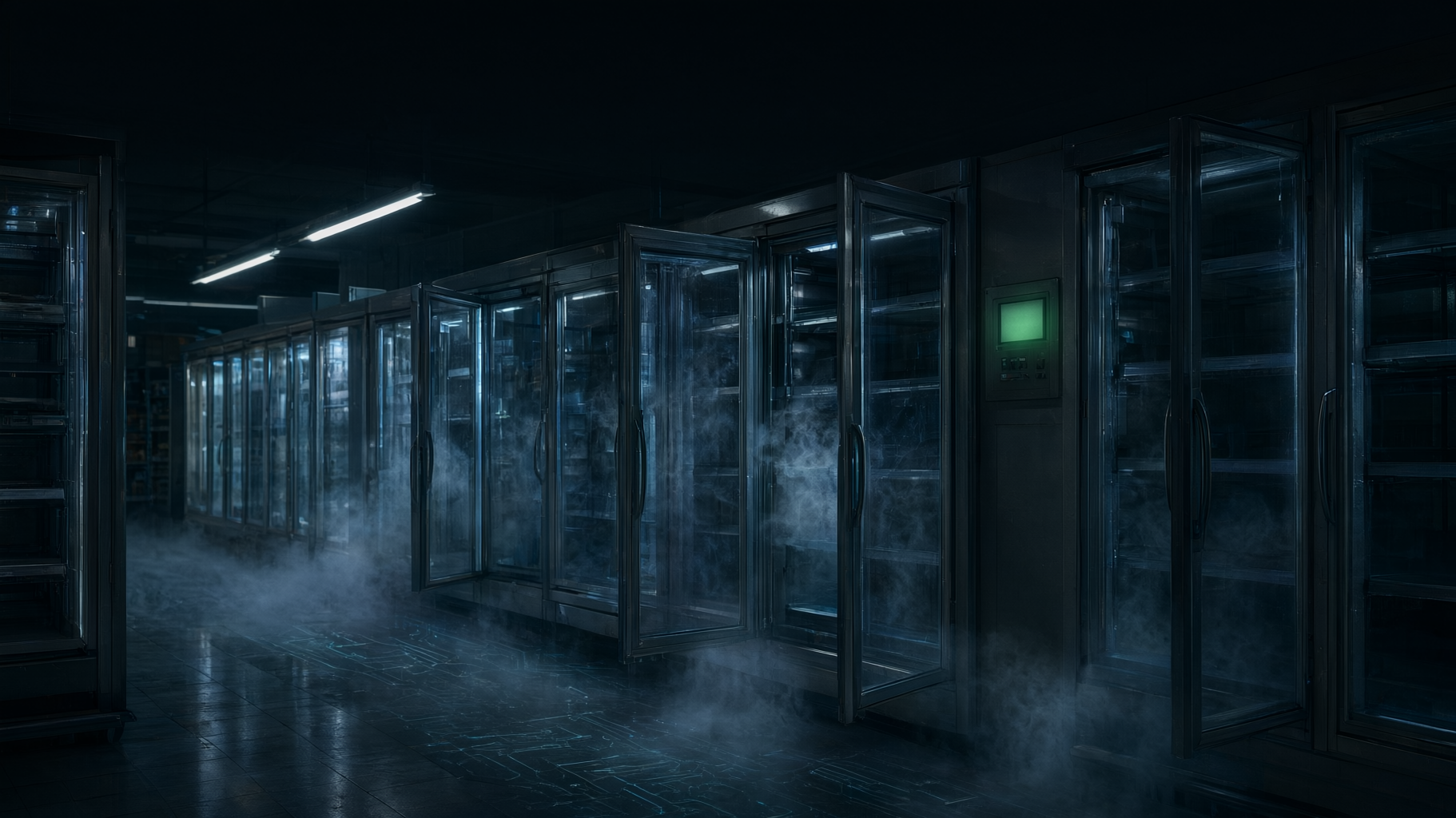
The thing that made me sit up was not that fridges failed, it is that they failed on command. Attackers “remotely defrosted refrigerators at multiple French supermarket chains overnight” in an operation reportedly aimed at Danfoss controllers, with French outlets putting the toll at 250 to 350 stores plus wasted stock and heavy losses.1 The early write-ups framed it as a cross-border event, with one reporting that “France, Belgium, and the Netherlands are reportedly affected”.2 I have watched this industry treat operational gear as if it lives outside the internet, and this is what that fiction costs when it breaks: full cases warming in unison, staff unable to override from the shop floor, food that cannot legally be sold even if it looks fine.
What makes this bigger than one vendor having a bad weekend is that the manuals for this disaster were already public. Two months earlier Claroty Team82 had published work titled “Freeze the Controller, Defrost the Food: Uncovering Vulnerabilities in Danfoss Refrigeration Controllers” after examining the AK-SM 800A platform.3 Around the same scene, a separate disclosure landed: “Ten vulnerabilities in Copeland controllers, which are found in thousands of devices used by the world’s largest supermarket chains and cold storage companies, could have allowed miscreants to manipulate temperatures and spoil food and medicine, leading to massive supply-chain disruptions.”4 Australian trade press drew the same link in plainer terms, warning that flaws in widely used supervisory controllers risked silent spoilage.5 This is why I read the Danfoss incident as systemic. It is not one bug in one box. It is two dominant controller families, both deployed at scale in supermarkets and cold storage, both described by researchers as manipulable in ways that spoil food and medicine.
The architecture explains why that scale matters. As one practitioner wearily pointed out, grocery stores do not run standalone bar fridges but long banks of cases fed by rooftop or outdoor condensing units and evaporators, all coordinated by a supervisory controller.6 Pop that controller and you do not lose one fridge, you lose the aisle. The anger underneath that technical point is fair. When Danfoss reportedly described much of the hit kit as legacy gear no longer receiving updates, one commenter snapped “They sell fricken refrigerators for God’s sake.”7 Fridges live for fifteen years, software support lives for five, and nobody priced the gap. I share that frustration, but I also want to be careful about what the evidence does not yet prove. Separately, Dutch reports had Albert Heijn, Etos and Gall and Gall dealing with disruption since Sunday afternoon.8 I am treating that as parallel, not proven connected. US military commissary outages in August, with at least 14 stores reportedly affected and networked controls under scrutiny, similarly raise questions without answering them.9 And while the August Danfoss research is suggestive, I cannot tell you which bug or credential the October attacker used, only that a capable public playbook existed.
That uncertainty does not weaken the systemic claim, it sharpens it. If the only path in was some exotic zero-day, Danfoss could patch and move on. If, as the disclosures suggest, standard supervisory controllers from more than one major supplier have carried critical, remotely reachable flaws, then every chain running centralised refrigeration on internet-touched controllers is living on borrowed time. The bluntest advice on the forums that night was also the most honest: “Pull the ethernet cord, now.”10 It is funny because it would work, and tiring because it is 2026 and isolation is still the fix. My take is that food retail needs to stop grading these boxes as whitegoods and start grading them as industrial control systems, with segmented networks, monitored remote access, tested manual override, and replacement plans that assume legacy kit will be targeted precisely because it cannot be patched. Attackers just showed they understand the cold chain better than its owners do. Defrost was the demonstration. Spoilage at scale, or selective warming that no one notices until the lab tests come back, is the threat that remains open.
Sources
- 1 Cyberattack shuts down refrigerators at French supermarkets — bleepingcomputer.com
- 2 ‘Unprecedented’ Cyberattack cripples supermarket fridges across Europe as hackers activate automatic defrosting — delivery and store prices also impacted by incident | Tom’s Hardware — tomshardware.com
- 3 presented by Claroty’s Team82 at DEF CON 34 — claroty.com
- 4 Frostbyte10 bugs put grocery refrigeration devices at risk • The Register — theregister.com
- 5 Refrigeration controller flaws risk silent spoilage - Food & Drink Business — foodanddrinkbusiness.com.au
- 6 @quickthrowman on Hackers activate automatic defrosting accross European supermarket fridges — ycombinator.com
- 7 @hn_throwaway_99 on Hackers activate automatic defrosting in supermarket fridges across Europe — ycombinator.com
- 8 NOS reported — nos.nl
- 9 Commissary refrigeration failures raise cyber questions — dysruptionhub.com
- 10 @anilakar on Hackers activate automatic defrosting accross European supermarket fridges — ycombinator.com
How this was made
- 01-research ~z-ai/glm-flash-latest $0.029
- 04-nominate ~deepseek/deepseek-v4-flash-latest $0.011
- 05-select ~google/gemini-flash-latest $0.006
- 06-write meta/muse-spark-1.3-contributor $0.002
- 08-visualise anthropic/claude-sonnet-5 $0.042
total $0.089