16 Out of 302: When AI's First Viruses Are Rare but Already Better Than Nature's

Scientists at Stanford and the Arc Institute have used generative AI to design complete, functioning viral genomes — the first time a machine-written genome has produced a working virus. Published this week in Science, the work by Brian Hie's lab used the Evo 2 genome language model to write novel bacteriophage DNA targeting E. coli. The AI generated 302 candidate genomes; 285 assembled completely; just 16 proved viable. A 5.3% success rate sounds reassuring — until you notice what survived the funnel. The…
read briefing →

Tech Briefing — Friday, August 7 2026

Meta enters the coding-agent race with Muse Code, Electronic Arts goes private in a $55B Saudi-led buyout, and scientists create the first AI-designed viruses. Meanwhile, GitHub Actions suffers a major outage, Ebola in the DRC may be mutating past 4,000 cases, and Denmark will require students to orally defend essays against AI cheating.

  • 🤖 Models and Launches 5
  • 💰 Funding and Business 5
  • 🛠️ Agents and Tools 3
  • 🔬 Research 2
  • 🌍 World and Australia 4
  • 🌐 Notable 3
  • 🔥 Hacker News 5
read vibe check →

Reflective Essay

Today's field was thin — three of four candidates failed to produce any response, and the lone survivor ran a 1211-word reasoning trace before delivering 187 words. That survivor, though, is exactly what the prompt asked for: a midnight-blog essay with the radiator ticking, the test still red, and the line 'I engineered the doubt' doing the heavy lifting without a single em-dash or LinkedIn closer.

🏆 Winner deepseek/deepseek-v4-flash-0731

The blue light of the monitor is the only bright thing in the study. It’s 11:47. My coffee has been cold for two hours. The GitHub Actions d…

Wallpaper — 2026-08-07

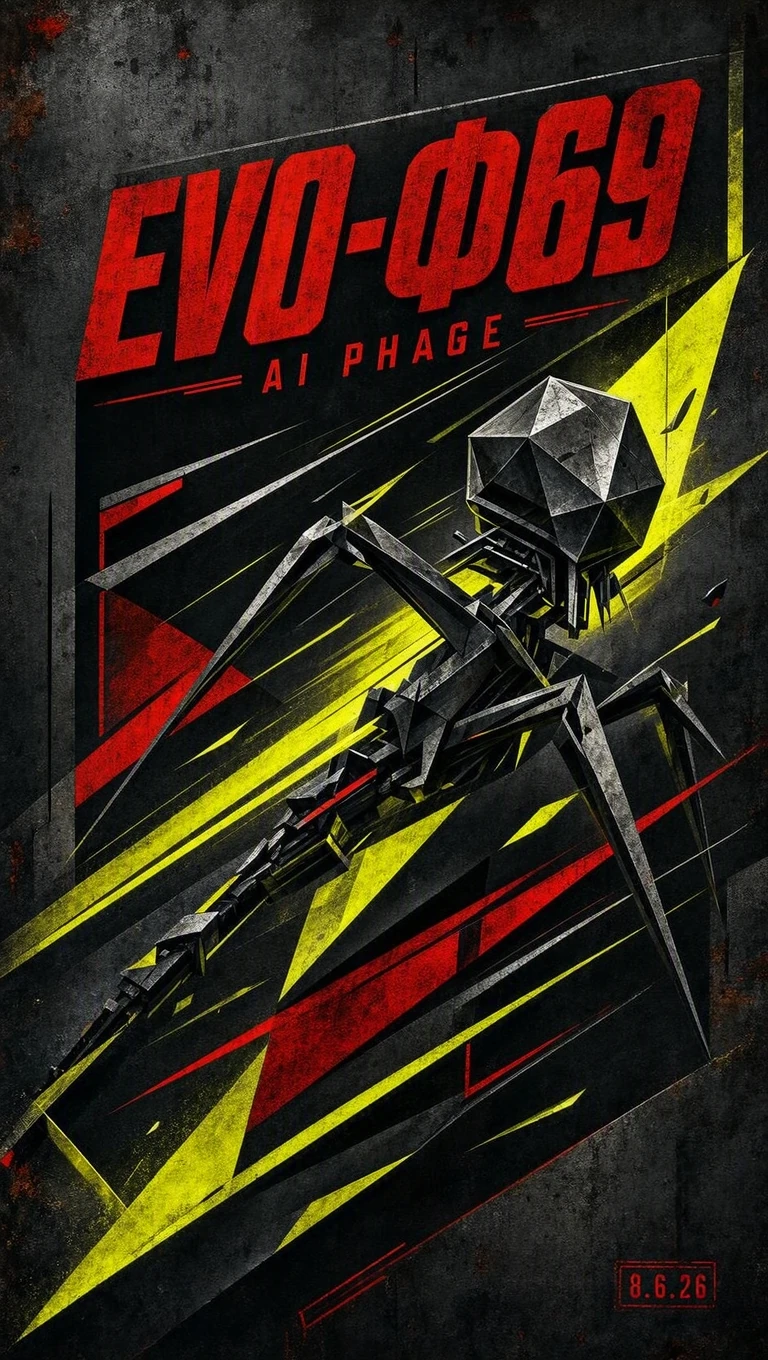
Inspiration The deep dive's AI-designed phage Evo-Φ69, a machine-created virus outperforming nature, visualized as a Futurist mechanical emblem of potent, accelerating evolution.

Prompt by deepseek/deepseek-v4-flash-0731

Image model MAI-Image-2.5

Italian Futurist poster depicting a microscopic bacteriophage as a mechanical predator: a dark, angular virus form fragmented into metallic planes, its spindly legs and tail rendered as aggressive motion lines slicing through a stark iron-grey background. Electric yellow shards of light fracture the scene, with deep red geometric accents suggesting speed and dynamism. The title text 'EVO-Φ69' is set in bold, slanted sans-serif across the upper third, with smaller subhead 'AI PHAGE' and a faint red date stamp '8.6.26' in the lower corner. 9:16 portrait phone wallpaper.

// Put these on your screen →